top of page
Jack A. Syage's Publications
Explore Jack's portfolio of publications covering topics in chemical physics, analytical instrumentation,
gastroenterology, and public health.
# | Title | Authors | Journal | Abstract |
|---|---|---|---|---|
1 | Picosecond Excitation and Trans-Cis Isomerization of Stilbene in a Supersonic Jet: Dynamics and Spectra | J.A. Syage, Wm.R. Lambert, P.M. Felker, A.H. Zewail, and R.M. Hochstrasser | Chem. Phys. Lett. 88, 266 (1982) | New details of the dynamics and spectroscopy of trans-stilbene are revealed by picosecond excitation of jet-cooled and collision-free molecules. The fluorescence spectra clearly show the low-frequency torsional modes of the ground state. The time-resolved fluorescence following S₁ excitation exhibit exponential decay times ranging from 2.7 ns to ≈190 ps for excitation wavelengths varying from 3102 Å (0 excess energy) to 2850 Å (2851 cm⁻¹ excess energy). The results indicate that an energy threshold for isomerization occurs at ≈1200 cm⁻¹. The redistribution of vibrational energy from the optically excited modes to the ethylene bond torsional modes leading to isomerization is discussed. |
2 | A Vector Model for CIDEP: The Role of the Exchange Interaction | J.A. Syage | Chem. Phys. Lett. 91, 378 (1982) | A vector model is presented which illustrates the role of the exchange interaction in CIDEP and relaxation. The vector representations of the S and T₀ radical pair states are constructed to have the same properties of angular momentum and symmetry as the corresponding wavefunctions. Applications of the vector model to net and multiplet CIDEP and to polarization quenching are discussed. |
3 | Direct observation of intramolecular energy transfer by selective picosecond laser excitation of a single chromophore in jet-cooled molecules | P. M. Felker, J. A. Syage, W. R. Lambert, and A. H. Zewail | Chem. Phys. Lett. 92, 1 (1982) | Direct, time-resolved intramolecular energy transfer in isolated, jet-cooled molecules was observed via picosecond laser excitation of an anthracene chromophore, revealing an energy threshold of 3 kcal/mole through exciplex emission monitoring. |
4 | Measurement of the rate of bimolecular electron spin relaxation between pairs of reactive radicals using time-resolved electron spin-echo spectroscopy | J.A. Syage, R.G. Lawler, and A.D. Trifunac | J. Chem. Phys. 77, 4774 (1982) | Time-resolved electron spin-echo spectroscopy was applied to measure bimolecular electron spin relaxation in acetate radicals generated by pulsed radiolysis. Analysis of spin-lattice relaxation times across radical concentrations revealed that the cross section for electron exchange exceeds that for chemical reaction, establishing exchange as the dominant relaxation pathway. |
5 | Jet-Cooled Styrene: Spectra and Isomerization | J. A. Syage, F. Al Adel, and A.H. Zewail | Chem. Phys. Lett. 103, 15 (1983) | The excitation and dispersed fluorescence spectra for the ùA' ← ùA' transition of styrene, cooled in a supersonic jet, are reported. Assignment of the vibrational modes in the ground and excited electronic states are made and the excess energy dependence of the fluorescence spectra are analyzed in terms of their relevance to the dynamics of photoisomerization. We compare our results with those of stilbene and discuss the influence of IVR and mode mixing in the S₁ surface. |
6 | Analysis of dose dependent effects in pulsed ESR spectra of reactive radicals produced by pulse radiolysis | R. G. Lawler, J. A. Syage, D. Bartels, and A. D. Trifunac | Radiation Research - Chemistry and Physics, edited by J. J. Boerse, G. W. Barendsen, H. B. Kal, and A. J. Van der Kogel, (Martinus Nijhoff, The Netherlands, 1983) | |
7 | Transient Solution of a Spin Exchange Model: Correspondence Between CIDEP and Relaxation | J.A. Syage | Chem. Phys. Lett. 108, 266 (1984) | A procedure for relating CIDEP and relaxation in a Heisenberg spin exchange (HSE) model is presented which considers all the spin states of a radical pair. The method relies on an exact (transient) solution of the radical pair density matrix under realistic assumptions and is illustrated for the simple •RH spin case. The results are cast in the form of Bloch-type equations and are suitable for describing time-resolved ESR experiments. |
8 | Jet spectroscopy of anthracene and deuterated anthracenes | W.R. Lambert, P.M. Felker, J.A. Syage, and A.H. Zewail | J. Chem. Phys. 81, 2195 (1984) | Reported fluorescence excitation and SVL spectra of jet-cooled anthracene isotopologues, providing ground- and excited-state vibrational assignments. These results complete the spectroscopy of the polyacene series and serve as a key reference for studies on excited anthracene dynamics. |
9 | Picosecond excitation and selective intramolecular rates in supersonic molecular beams. III. Photochemistry and rates of a charge transfer reaction | J.A. Syage, P.M. Felker, and A.H. Zewail | J. Chem. Phys. 81, 2233 (1984) | Picosecond time-resolved fluorescence studies of A–(CH₂)₃–φ exciplex formation reveal ultrafast IVR, a reaction threshold near 900 cm⁻¹, and strong charge-transfer stabilization. Comparisons with solution studies highlight similar static properties but distinct reaction dynamics, underscoring the solvent’s role in exciplex formation. |
10 | Picosecond dynamics and photoisomerization of stilbene in supersonic beams. I. Spectra and mode assignments | J.A Syage, P.M. Felker, and A.H. Zewail | J. Chem. Phys. 81, 4685 (1984) | Jet-cooled excitation and dispersed fluorescence spectra of trans-stilbene isotopologues were analyzed, assigning new low-frequency modes and identifying phenyl rotational dynamics. Results indicate significant geometry change upon excitation, a barrier to isomerization near 1100–1200 cm⁻¹, and broad IVR contributions, with implications for mode mixing and isomerization mechanisms. |
11 | Picosecond dynamics and photoisomerization of stilbene in supersonic beams. II. Reaction rates and potential energy surface | J.A. Syage, P.M. Felker, and A.H. Zewail | J. Chem. Phys. 81, 4706 (1984) | Comprehensive picosecond studies of t-stilbene photoisomerization in a supersonic jet reveal extensive vibrational energy redistribution above 900–1000 cm⁻¹, a barrier to isomerization near 3.3 kcal/mol, and lifetimes of 2.5–2.7 ns. Observed rates in isolated molecules deviate from RRKM predictions, highlighting the role of IVR, mode mixing, and diabatic surface effects. |
12 | Picosecond excitation and selective intramolecular rates in supersonic molecular beams. IV. Alkylanthracenes | J.A. Syage, P.M. Felker, D.H. Semmes, F. Al Adel, and A.H. Zewail | J. Chem. Phys. 82, 2896 (1985) | Picosecond SVL fluorescence studies of jet-cooled 9-methyl- and 9-hexylanthracene reveal how alkyl substitution alters IVR dynamics compared to anthracene. Energy thresholds for saturation of decay rates depend on substituent (~1800 cm⁻¹ for anthracene, ~1000 cm⁻¹ for 9-methylanthracene, ~400 cm⁻¹ for 9-hexylanthracene), underscoring the role of low-frequency modes in IVR. |
13 | Laser Spectroscopy in Molecular Beams: An Automated System for Obtaining High Resolution Spectra of Large Molecules | B.W. Keelan, J.A. Syage, J.F. Shepanski, and A.H. Zewail | Int. Conf. Lasers '83, 718 (1985) | A nanosecond laser pulsed molecular beam apparatus designed to obtain excitation and dispersed fluorescence spectra of cold molecules is described in detail. Typical spectra are presented to demonstrate the capabilities of the system. |
14 | Ion dip spectroscopy of higher excited vibronic states of aniline | J.A. Syage and J.E. Wessel | J. Chem. Phys. 85, 6806 (1986) | Double-resonant ion dip spectroscopy was applied to aniline and aniline-d₅ in supersonic beams, enabling detection of short-lived higher vibronic states. Measurements revealed broad vibrational features, isotope effects on nonradiative decay, and evidence of predissociation and state mixing, demonstrating IDS as a powerful probe of transient excited states. |
15 | A unified approach to spin polarization (CIDEP) and relaxation by Heisenberg spin exchange. I. Generalized equations for reactive radicals | J.A. Syage | J. Chem. Phys. 87, 1022 (1987) | A theoretical framework based on Heisenberg spin exchange was developed to describe chemically induced dynamic electron polarization (CIDEP) and relaxation in radical pairs. Generalized Bloch-type equations were derived, predicting unique relaxation behaviors and frequency shifts, and providing a unified basis for interpreting time-resolved ESR studies of reactive radicals. |
16 | A unified approach to spin polarization (CIDEP) and relaxation by Heisenberg spin exchange. II. Evaluation of the interradical distance dependence | J.A. Syage | J. Chem. Phys. 87, 1033 (1987) | Extending the Heisenberg spin exchange framework, this work evaluates the distance dependence of exchange strength J(r) and its impact on CIDEP enhancement and spin exchange relaxation. Analytic models incorporating diffusion and encounter distributions are developed, yielding results consistent with numerical calculations and experiments on radical ions, isotopes, and acetone photoreduction. |
17 | Resonance ion dissociation spectroscopy of naphthalene ions prepared in a supersonic expansion | J. A. Syage and J.E. Wessel | J. Chem. Phys. 87, 3313 (1987) | Resonance ion dissociation spectra of naphthalene and 2-methylnaphthalene cations in supersonic beams revealed discrete vibronic resonances and strong vibronic coupling effects. The red two-photon dissociation of 2-methylnaphthalene was modeled with a four-level rate system, clarifying interactions between ground, excited, and dissociative states. |
18 | Ultrasensitive detection of atmospheric constituents by supersonic molecular beam, multiphoton ionization, mass spectroscopy | J.A. Syage, J.E. Pollard, and R.B. Cohen | Appl. Opt. 26, 3516 (1987) | A supersonic molecular beam, resonance-enhanced multiphoton ionization, and TOF mass spectrometry were combined to develop an ultrasensitive detection method for atmospheric monitoring. Detection limits reached 300 ppt for dimethyl sulfide, with ~10⁴ selectivity over chemically similar compounds. Organophosphonate and organosulfide studies highlighted strong dependence of fragment ion formation on resonant intermediate states. |
19 | Double optical resonance mass selective detection of aromatic molecules in a supersonic molecular beam | J.A. Syage and J.E. Wessel | Appl. Opt. 26, 3573 (1987) | Two-color double resonance excitation in supersonic molecular beams, combined with TOF mass spectrometry, enabled highly selective detection of aromatic molecules. Applications included excitation above/below ionization thresholds, stimulated emission pumping for ion dip detection, and resonance ion dissociation, demonstrating powerful optical and mass selectivity. |
20 | Antiresonance in autoionizing Rydberg series of naphthalene | J.A. Syage and J.E. Wessel | J. Chem. Phys. 87, 6207 (1987) | Clear Fano-type antiresonance line profiles were observed in autoionizing Rydberg series of jet-cooled naphthalene. Analysis revealed unusually narrow linewidths, long-lived states, and d-series assignment, marking the first definitive demonstration of asymmetric antiresonances in a large polyatomic molecule. |
21 | Supersonic Molecular Beam, Resonance Enhanced Multiphoton Ionization, Time-of-Flight Mass Spectroscopy 1. Technique and Detectability Limit. | J.A. Syage, J.E. Pollard, and R.B. Cohen | Proceedings of the 1986 Scientific Conference on Chemical Defense Research, (U. S. Army, CRDEC-SP-87008, Aberdeen, MD, 1987), p. 751 | A supersonic molecular beam with resonance-enhanced multiphoton ionization and TOF mass spectrometry was developed for ultrasensitive detection of atmospheric constituents. The method achieved detection limits below 300 ppt and ~10⁴ selectivity, demonstrated on organophosphonate and sulfide chemical warfare simulant molecules. |
22 | Supersonic Molecular Beam, Resonance Enhanced Multiphoton Ionization, Time-of-Flight Mass Spectroscopy 2. UV and VUV Spectroscopy of CWA Simulants | J.A. Syage, J.E. Pollard, and R.B. Cohen | ibid., p. 757 | UV and VUV spectroscopy of CWA simulants was performed using supersonic molecular beams with single vibronic level excitation. High-resolution spectra revealed vibrational structure of organophosphonate and sulfide compounds, while VUV absorption identified new electronic states extending to the ionization threshold. |
23 | Supersonic Molecular Beam, Resonance Enhanced Multiphoton Ionization, Time-of-Flight Mass Spectroscopy 3. Reaction Dynamics from Higher Excited States of CWA Simulants | J.A Syage, J.E. Pollard, and R.B. Cohen | ibid., p. 763 | State- and energy-selective reaction dynamics of CWA simulants were studied using supersonic molecular beams, multiphoton ionization, and mass spectrometry. Product identification and internal energy analysis revealed pathways for dissociation and rearrangement, with comparisons between one- and two-color MPI and electron impact ionization. |
24 | Ion Dip Spectroscopy and Multiresonant Processes in Aromatic Molecules by Supersonic Molecular Beam Mass Spectroscopy | J.A. Syage and J.E. Wessel | Opt. Soc. Am. Tech. Digest, Vol. 5 (1987) | Two-color, mass-resolved ion dip spectroscopy involving multiresonant single vibronic level excitation is described as a selective detection technique as well as a novel spectroscopic tool. |
25 | Ultratrace Detection of Atmospheric Contaminants by Supersonic Molecular Beam, Multiphoton Ionization, Mass Spectroscopy | J.A. Syage, J.E. Pollard, and R.B. Cohen | Opt. Soc. Am. Tech. Digest, Vol. 5 (1987) | An ultratrace detection method that offers < 300 ppt and selectivity of ~10⁴ is demonstrated for organophosphonate and sulfide chemical agent simulant molecules. |
26 | Multiphoton ion fragmentation spectroscopy | J. E. Wessel and J. A. Syage | J. Opt. Soc. Am. B, 4, P178 (1987) | |
27 | Measurements of electron-impact ionization and dissociation cross sections in a crossed electron-supersonic molecular beam | J.A. Syage | Chem. Phys. Lett. 143, 19 (1988) | A crossed electron–supersonic molecular beam method was developed to measure absolute electron-impact ionization and dissociation cross sections. Results include partial cross sections for noble gas ions and rovibrationally cold ammonia fragments, providing improved precision over prior studies. |
28 | Dynamics of flame propagation using laser-induced spark initiation: Ignition energy measurements | J.A. Syage, E.W. Fournier, R. Rianda, and R.B. Cohen | J. Appl. Phys. 64, 1499 (1988) | Laser-induced spark ignition studies of H₂/air mixtures measured ignition thresholds and flame inhibition as a function of CO₂ concentration. Comparison with electric discharge ignition and modeling of temporal energy density provided insight into molecular dynamics governing flame propagation. |
29 | Molecular Multiphoton Ionization and Ion Fragmentation Spectroscopy | J.A. Syage and J.E. Wessel | Appl. Spect. Rev. 24, 1 (1988) | A comprehensive review of multiphoton ionization (MPI) spectroscopy emphasizing ion fragmentation dynamics and its role in ultrasensitive molecular detection. The article surveys theoretical foundations, photofragmentation mechanisms, and advances in state-selective excitation and photodissociation relevant to analytical and fundamental spectroscopy. |
30 | Resonant two-photon ionization spectroscopy of naphthalene clusters | J.A. Syage and J.E. Wessel | J. Chem. Phys. 89, 5962 (1988) | Two-photon ionization spectroscopy of jet-cooled naphthalene clusters (N₂–N₅) revealed vibronic structure arising from excitonic coupling between monomers. Splitting patterns and polarization analysis indicate specific molecular alignments and stacking geometries, providing insight into resonance interactions and cluster structure. |
31 | Vibrational Autoionization and Fano-Antiresonance in Rydberg Series of Naphthalene | J.A. Syage and J.E. Wessel | AIP Conf. Proc. 172, 359 (1988) | Asymmetric Fano-line profiles have been observed by autoionization for specific vibrational excitation of Rydberg series in jet-cooled naphthalene. The line shapes were analyzed in terms of degenerate resonance interference between optically active discrete and continua states. Observed linewidths were as narrow as 6 cm⁻¹ for naphthalene and 3 cm⁻¹ for naphthalene-d₈. |
32 | Minimum Ignition Energy Measurements Using Laser Induced Spark Initiation | J.A. Syage, R. Rianda, E.W. Fournier, and R.B. Cohen | Proceedings of the 24th JANNAF Combustion Meeting, (CPIA Press, Baltimore, 1988) | Laser-induced spark ignition experiments measured minimum ignition energies for H₂/air, hexane/air, and UDMH/air mixtures. Results examined flame inhibition by CO₂, compared with electric discharge ignition, and informed a model linking flame initiation to temporal and energy density characteristics of the source. |
33 | Reactivity of Aniline Cation to Stepwise Solvation in Hydrogen-Bonded Molecular Clusters | J.A. Syage | J. Phys. Chem. 93, 170 (1989) | Mass-resolved REMPI and EI studies of aniline solvated by NH₃, N₂H₄, CH₃OH, and H₂O revealed solvent-size thresholds for hydrogen and proton transfer. Microsolvation influenced dissociation pathways and proton affinities, with results correlating well to a stepwise solvation model. |
34 | On the Direct Vibrational Spectroscopy of Transition States | J.A. Syage | Chem. Phys. Lett. 158, 122 (1989) | A method using tunable picosecond laser pulses was developed to probe vibrational resonances in chemical reaction transition states. Modeling with radiation-dressed potentials and density-matrix solutions linked spectral lineshapes to reaction dynamics and transition state surface structure. |
35 | Resonance Ion Dissociation Spectroscopy of CH₃I⁺ Produced by Molecular Beam Electron-Impact Ionization | J.A. Syage, J.E. Pollard, and J. Steadman | Chem. Phys. Lett. 161, 103 (1989) | Resonance ion dissociation spectroscopy of jet-cooled CH₃I⁺ demonstrated high-resolution vibronic spectra following electron-impact ionization and laser photodissociation. Results revealed Franck–Condon dominated vibrational distributions and explained the absence of the umbrella mode transition. |
36 | Direct Vibrational Spectroscopy of Transition States | J.A. Syage | Proc. Int. Conf. Lasers '88, 594 (1989) | Picosecond infrared excitation was proposed to probe vibrational resonances in chemical reaction transition states. Pump–probe modeling with radiation-dressed potentials and density-matrix solutions linked spectral lineshapes to reaction dynamics and the structure of the transition state surface. |
37 | Stepwise Solvation of Reactive Aniline Cations | J.A. Syage | Proc. Int. Conf. Lasers '88, 618 (1989) | Mass-resolved REMPI and EI studies examined stepwise solvation of aniline with NH₃, N₂H₄, CH₃OH, and H₂O. Results identified solvent-size thresholds for proton transfer and revealed an N₂H₄-driven charge transfer mechanism producing extensive HNC·Mₙ⁺ formation. |
38 | Photodissociation Spectroscopy of Cold Molecular Ions and Cluster Ions | J.A. Syage and J. Steadman | Laser Spectroscopy IX, edited by M. S. Feld, J. E. Thomas, and A. Mooradian (Academic Press, New York 1989) p. 418 | This paper introduces methods for high-resolution spectroscopy of non-fluorescing ions and size-specific photodissociation of cluster ions. By preparing rovibrationally cold ions and using resonant absorption to induce photodissociation, the study provides vibronic spectra and isolates cluster-specific behavior. Demonstrations include cold ion photodissociation spectroscopy of CH₃I⁺ and resonant photodissociation of (CH₃I)ₙ⁺ clusters. |
39 | Resonant two-photon ionization spectroscopy of naphthalene clusters | J. E. Wessel and J. A. Syage | AIP Conf. Proc. 194, 359 (1989) | |
40 | Excitonic Interactions in Naphthalene Clusters | J.E. Wessel and J.A. Syage | J. Phys. Chem. 94, 737 (1990) | This study investigates excitonic interactions in naphthalene clusters using resonance two-photon ionization spectroscopy. Results show that tetramers resemble bulk crystalline naphthalene, while trimers minimize direct interactions. No rapid dynamics or multiple conformations are observed in the excited states. Isotopically mixed trimers favor the HDH geometry. Excitonic splittings scale with transition strengths but often exceed dipolar estimates, indicating strong long-range interactions. The approach provides insights into cluster structure and dynamics, with relevance for larger molecular clusters. |
41 | Photodissociation and metastable decay of solvated cluster ions | J.A. Syage | J. Chem. Phys. 92, 1804 (1990) | Solvated ion dissociation and decay were examined using picosecond photoionization and electron–laser–molecular beam techniques, revealing that ammonia solvation slows dissociation and that cluster ions dissociate through van der Waals and multiphoton processes rather than direct bond cleavage. |
42 | Picosecond Mass-Selective Measurements of Molecular Cluster Reactions: (CH₃I)ₙ Ã State Excitation | J.A. Syage and J. Steadman | Chem. Phys. Lett. 166, 159 (1990) | Picosecond molecular beam mass spectrometry was used to study the reaction dynamics of (CH₃I)ₙ clusters under Ã-state excitation. The results reveal sequential loss of CH₃ radicals and recombination of I atoms within the clusters, with larger clusters showing extensive demethylation driven by intracluster energy redistribution and ethane elimination. |
43 | Picosecond Mass-Selective Measurements of Phenol-(NH₃)ₙ Acid–Base Chemistry in Clusters | J. Steadman and J.A. Syage | J. Chem. Phys. 92, 4630 (1990) | Picosecond time-resolved mass spectrometry was used to measure acid dissociation and recombination kinetics in phenol–ammonia clusters. The results show clear solvent-size thresholds, revealing how stepwise solvation alters acid–base reactivity and proton transfer dynamics on ultrafast timescales. |
44 | A Time-of-Flight Mass Filter for Ion and Cluster Ion Photodissociation Studies | J.A. Syage and J. Steadman | Rev. Sci. Instrum. 61, 1204 (1990) | A low-mass rejection filter for time-of-flight spectrometry was developed to isolate photodissociation products from specific ions or clusters while excluding unwanted fragments. The technique enables high-resolution analysis of resonance ion dissociation and solvation processes using picosecond or electron-impact ionization sources. |
45 | Picosend and Femtosecond Spectroscopy from Laboratory to Real World | J.A. Syage | Proc. SPIE - Int. Soc. Opt. Eng. 1209, 64 (1990). [invited paper] | Picosecond molecular beam mass spectrometry was used to study ultrafast reactions in molecular clusters, including proton transfer in phenol–ammonia systems and radical chemistry in methyl iodide clusters. The results reveal solvent-size–dependent proton transfer and rapid demethylation driven by intracluster recombination and ethane elimination. |
46 | Real-time Detection of Chemical Agents Using Molecular Beam Laser Mass Spectrometry | J.A. Syage | Anal. Chem. 62, 505A (1990). [invited feature article] | A resonance-enhanced multiphoton ionization mass spectrometry (MPI-MS) system was developed for selective, rapid detection of airborne chemical warfare agents. By combining supersonic molecular beam cooling with high-resolution time-of-flight analysis, the method achieves high sensitivity while distinguishing toxic compounds from naturally occurring atmospheric molecules. |
47 | Strong Field Effects in the Spectroscopy of the B̃ Rydberg State of CH₃I | J.A. Syage and J. Steadman | J. Phys. Chem. 94, 7343 (1990) | Resonance-enhanced multiphoton ionization (REMPI) spectroscopy of CH₃I revealed strong-field effects including line splitting, new transitions, and frequency shifts. These effects arise from the interplay between predissociation and photoionization rates, which depend on laser pulse intensity and timing. |
48 | Detection of Neutral and Ionic Reaction Mechanisms in Molecular Clusters | J. Steadman, E.W. Fournier, and J.A. Syage | Appl. Opt. 29, 4962 (1990) | Picosecond resonance-enhanced multiphoton ionization and mass-selective ion photodissociation techniques were used to analyze reaction dynamics in molecular clusters. The work distinguishes neutral and ionic processes such as proton transfer, evaporation, and van der Waals dissociation, with applications demonstrated in phenol–ammonia and methyl iodide clusters. |
49 | Picosecond free radical chemistry in clusters: (CH₃I)ₙ A state excitation | J. A. Syage and J. Steadman | Proc. IQEC '90 8, 196 (1990) | |
50 | Picosecond acid-base chemistry in clusters: Phenol-(NH₃)ₙ | J. Steadman and J. A. Syage | Proc. IQEC '90 8, 212 (1990). [invited paper] | |
51 | New Developments in Molecular Detection by Supersonic Molecular Beam, Laser Mass Spectrometry | J.A. Syage | Lasers and Mass Spectrometry, edited by D. M. Lubman (Oxford University Press, New York, 1990) p. 468. [invited chapter] | This work outlines advances in trace chemical detection using supersonic molecular beam and multiphoton ionization mass spectrometry. The approach enhances sensitivity and selectivity for atmospheric monitoring and hazardous material detection by combining resonance-enhanced ionization with chromatographic and time-of-flight methods to selectively identify target compounds in complex mixtures. |
52 | A Vacuum Ultraviolet, Supersonic Jet Absorption Spectrometer | E.W. Fournier, R.A. Hertz, J. Steadman, R.B. Cohen, and J.A. Syage | Appl. Spectrosc. 45, 468 (1991) | A tunable absorption spectrometer combining vacuum ultraviolet (VUV) excitation with supersonic jet cooling was developed to record high-resolution molecular spectra. The system enables direct absorption measurements of rotationally cooled molecules using a deuterium lamp source and dual-gate detection, demonstrated for NH₃ and CH₃I. |
53 | Collinear Reactive Scattering of State-Selected H₂⁺ + He → HeH⁺ + H: A Method for Probing Dynamical Resonances | J.E. Pollard, J.A. Syage, L.K. Johnson, and R.B. Cohen | J. Chem. Phys. 94, 8615 (1991) | An experimental method using state-selected ion beams and collinear scattering geometry was developed to study dynamical resonances in bimolecular reactions. The approach measures state-resolved differential cross sections for the H₂⁺ + He → HeH⁺ + H reaction, enabling precise correlation of collision energy, resonance lifetime, and product scattering dynamics. |
54 | Picosecond Measurements of Phenol Excited-State Proton Transfer in Clusters. I. Solvent Basicity and Cluster Size Effects | J.A. Syage and J. Steadman | J. Chem. Phys. 95, 2497 (1991) | Picosecond spectroscopy was used to measure excited-state proton transfer (ESPT) in phenol–solvent clusters, revealing a critical cluster size (n ≥ 5) for proton transfer in phenol–ammonia systems. The results show how solvent basicity and molecular composition influence ESPT rates and solvent reorganization dynamics. |
55 | Picosecond Studies of Proton Transfer in Clusters. 2. Dynamics and Energetics of Solvated Phenol Cation | J. Steadman and J.A. Syage | J. Am. Chem. Soc. 113, 6786 (1991) | The dissociative proton transfer of the phenol cation was examined in molecular clusters of NH₃, CH₃OH, and H₂O using picosecond excitation and delayed ionization. The results confirm a double-well reaction coordinate and quantify activation energies and enthalpies for solvation-dependent proton transfer, showing distinct inner- and outer-well reaction pathways with barriers of 0.6–1.0 eV. |
56 | Time-Resolved Studies of Phenol Proton Transfer in Clusters. 3. Solvent Structure and Ion-Pair Formation | J. Steadman and J.A. Syage | J. Phys. Chem. 95, 10326 (1991) | Time-resolved resonance-ionization spectroscopy was used to study proton transfer and ion-pair formation in phenol–solvent clusters. Long-lived ion-pair states were identified in ammonia and trimethylamine clusters, revealing size-dependent coordination effects and selective proton transfer pathways within mixed solvent environments. |
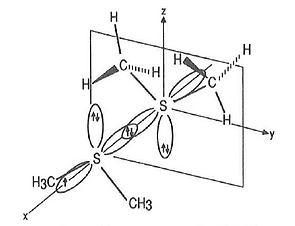
57 | Photochemistry of Sulfide Dimer Cations in Clusters of Dimethyl Sulfide | J.A. Syage, J.E. Pollard, and R.B. Cohen | J. Phys. Chem. 95, 8560 (1991) | Dimethyl sulfide cluster ions were studied using resonance-enhanced multiphoton and electron-impact ionization, revealing the formation of a stable three-electron sulfur–sulfur bonded dimer cation. Wavelength-dependent excitation produced distinct photochemical pathways, including conversion to a cyclic thiirenium ion structure at longer wavelengths. |
58 | Electron Impact Cross Sections for Multiple Ionization of Ar: Detector Gain Effects Revealed | J.A. Syage | J. Phys. B. 24, L527 (1991) | Partial cross sections for multiple ionization of argon were measured over 0–660 eV, yielding new data for Ar⁴⁺ and Ar⁵⁺ formation. The study identifies discrepancies in prior results as arising from electron multiplier gain dependence on ion charge and impact energy. |
59 | Electron-Impact Cross Sections for Multiple Ionization of Kr and Xe | J.A. Syage | Phys. Rev. A 46, 5666 (1992) | Partial cross sections for multiple ionization of krypton and xenon (up to Kr⁶⁺ and Xe⁶⁺) were measured from 0–470 eV using a crossed-beam time-of-flight mass spectrometer. The results refine previous data and attribute discrepancies in earlier studies to uncorrected detector gain effects, providing new threshold ionization measurements for higher charge states. |
60 | Spectroscopy and Dynamics of Jet-Cooled Hydrazines and Ammonia. I. Single-Photon Absorption and Ionization Spectra | J.A. Syage, R.B. Cohen, and J. Steadman | J. Chem. Phys. 97, 6072 (1992) | Vacuum ultraviolet absorption and photoionization spectroscopy of jet-cooled hydrazines (N₂H₄, MMH, UDMH) and ammonia revealed ionization thresholds and broad spectral features linked to molecular geometry changes upon ionization. The results show that the broad hydrazine bands arise from structural relaxation, while NH₃ exhibits sharp, well-defined ionization behavior consistent with planarization in the ion state. |
61 | Spectroscopy and Dynamics of Jet-Cooled Hydrazines and Ammonia. II. Electron-Impact Dissociative Ionization | J.A. Syage | J. Chem. Phys. 97, 6085 (1992) | Electron-impact ionization of jet-cooled NH₃, N₂H₄, and MMH was studied from 10–270 eV to determine dissociative-ionization cross sections, fragment appearance potentials, and kinetic energy distributions. The results provide the first detailed measurements for N₂H₄ and MMH, showing consistent ionization behavior with instrument-dependent kinetic energy variations and evidence of extensive molecular rearrangement during fragmentation. |
62 | Probing Double-Minima Ion–Molecule Reaction Coordinates by Photoelectron Spectroscopy of Clusters: PhOH⁺ + NH₃ → PhO + NH₄⁺ | J.A. Syage and J. Steadman | J. Phys. Chem. 96, 9606 (1992) | Photoelectron spectroscopy was used to measure the energy distribution of ion–molecule complexes in the PhOH⁺ + NH₃ → PhO + NH₄⁺ reaction. The results confirm a double-minima potential barrier and establish the proton-transfer activation energy between 1.0 and 1.5 eV. |
63 | Structure–Reactivity Effects in the Picosecond Dynamics of Isolated Clusters | J.A. Syage and J. Steadman | Proc. SPIE - Int. Soc. Opt. Eng. 1638, 36 (1992). [invited paper] | Reaction rates in small molecular clusters were measured to explore how solvent structure and cluster composition influence reactivity. For phenol–ammonia and phenol–methanol systems, results show rate inhibition by CH₃OH addition, differing reaction rates for inequivalent phenol dimers, and solvent reorganization following proton transfer on a sub-nanosecond timescale. |
64 | Spectroscopy and predissociation rates of the B and C Rydberg states of jet-cooled CH₃I | J. A. Syage and J. Steadman | Proc. QELS 13, 8 (1992) | |
65 | Measurement of Cluster Reorganization by Time-Resolved Photoelectron Spectroscopy | J.A. Syage | Chem. Phys. Lett. 202, 227 (1993) | Time-resolved photoelectron spectroscopy was used to observe solvent reorganization following excited-state proton transfer in phenol–ammonia clusters. A 300 ps shift in the photoelectron band reflects dynamic changes in Franck–Condon factors due to evolving solvent geometry around the transferred proton. |
66 | Predissociation Lifetimes of the B̃ and C̃ Rydberg States of CH₃I | J.A. Syage | Chem. Phys. Lett. 212, 124 (1993) | Single-photon and resonance-enhanced multiphoton ionization spectroscopy of jet-cooled CH₃I was used to measure vibronic lifetimes in the B̃ and C̃ Rydberg states. Predissociation lifetimes ranged from 0.67 to 0.92 ps for B̃-state levels and 0.25 ps for the C̃-state origin, indicating mode-dependent dissociation dynamics. |
67 | A Paraboloidal Electrostatic Reflector for Molecular-Beam Time-of-Flight Photoelectron Spectrometers | J. Steadman and J.A. Syage | Rev. Sci. Instrum. 64, 3094 (1993) | A paraboloidal electrostatic reflector (PER) design was developed for molecular-beam time-of-flight photoelectron spectrometers, offering up to two orders of magnitude improvement in detection efficiency. The system achieves an energy resolution of ΔE/E ≈ 0.02, enabling sensitive measurements of weak ionization signals from low-power picosecond experiments and molecular clusters. |
68 | Improved Vacuum Ultraviolet Supersonic Jet Absorption Spectrometer | J. Steadman and J.A. Syage | Appl. Spectrosc. 47, 2061 (1993) | Design enhancements to the supersonic jet ultraviolet and vacuum ultraviolet absorption spectrometer achieved a tenfold increase in sensitivity and fivefold improvement in resolution. Improvements included direct detection of VUV photons, a triple-pass mirror configuration, and an extended monochromator path length enabling more precise studies of gas-phase and cryogenic molecular samples. |
69 | Tunneling Mechanism for Excited-State Proton Transfer in Phenol–Ammonia Clusters | J.A. Syage | J. Phys. Chem. 97, 12523 (1993). [invited paper - special issue] | Picosecond pump–probe spectroscopy and modeling revealed a tunneling-driven mechanism for excited-state proton transfer (ESPT) in phenol–ammonia clusters. Deuterated analogs showed extended lifetimes, supporting tunneling as the rate-limiting process. The reaction barrier arises from crossing between a covalent and a solvent-stabilized ion-pair state of phenol. |
70 | Chemistry in Clusters: Solvation at the Single Molecule Level | J.A. Syage | Ultrafast Spectroscopy in Chemical Systems, edited by J. D. Simon (Kluwer Academic Publishers, New York, 1994), p. 289. [invited chapter] | This chapter explores molecular clusters as an intermediate phase bridging gas and condensed matter, providing a microscopic view of solvation and chemical reactivity at the single-molecule level. Through photoexcitation and molecular beam methods, Syage examines energy redistribution, proton transfer, and radical reactions within clusters, revealing how cluster chemistry models condensed-phase behavior under precisely controlled conditions. |
71 | Detection of the perpendicular à state transitions of CH₃I by imaging of photofragment angle-velocity distributions | R.A. Hertz and J.A. Syage | J. Chem. Phys. 100, 9265 (1994) | A two-dimensional imaging technique was used to measure angle-velocity distributions of CH₃I photofragments, revealing weak perpendicular transitions in the à state at 266 and 304 nm. The study quantifies transition cross sections and crossing probabilities between spin-orbit components, enhancing understanding of CH₃I photodissociation dynamics. |
72 | Picosecond photoelectron studies of cluster dynamics | J.A. Syage | Z. Phys. D 30, 1 (1994). [invited feature article] | This invited progress report reviews advances in time-resolved photoelectron spectroscopy (TR/PES) for studying molecular and cluster dynamics. Syage discusses solvent reorganization during excited-state proton transfer in phenol–ammonia clusters and explores bimolecular reaction dynamics in molecular dimers. The work highlights how TR/PES elucidates condensed-phase solvation effects and reaction barrier structures at the molecular level. |
73 | Femtosecond pulses probe molecular events faster | J.A. Syage | Laser Focus World 30, 73 (Oct., 1994). [invited cover story] | This article discusses how femtosecond laser pulses enable the direct observation of molecular events on the timescale of bond formation and breaking. Syage highlights advances in ultrafast spectroscopy that bridge microscopic and macroscopic reaction dynamics, allowing real-time study of solution-phase chemistry, reaction coordinates, and nanoscale transformations. |
74 | Solvation and Vibrational Effects on Proton Tunnelling in Clusters | J.A. Syage | Faraday Discuss. Chem. Soc. 97, 401 (1994). [invited article] | A theoretical analysis of proton tunneling mechanisms in excited-state ROH(NH₃)ₙ clusters, examining how solvent interactions and vibrational coupling influence tunneling rates. Three models—solvent-independent, solvent-activated, and vibration-coupled—are compared to experimental data, clarifying the role of solvation and molecular motion in cluster tunneling dynamics. |
75 | Imaging of photofragment angle-velocity distributions: The perpendicular A state transitions of CH₃I | J. A. Syage and R. A. Hertz | Photodissociation Dynamics, edited by G. G. Balint-Kurti and M. A. Law (CCP6, Daresbury, UK, 1994), p. 29 | |
76 | Time-resolved, planar laser induced fluorescence studies of laser ignition | A. McIlroy, T. A. Spiglanin, R. B. Cohen, and J. A. Syage | AIAA, 94-2423 (1994) | |
77 | The role of solvent and vibrations on proton tunneling in clusters | J.A. Syage | Proc. SPIE - Int. Soc. Opt. Eng. 2124, 360 (1994). [invited paper] | Develops a theoretical framework describing how solvent interactions and vibrational coupling influence proton tunneling in ROH(NH₃)ₙ clusters. The work refines prior models of solvent-independent and solvent-activated tunneling by incorporating vibrational coupling between reactant and product states, aligning theoretical predictions with observed tunneling rates. |
78 | Photofragment imaging of angle-velocity distributions | R.A. Hertz and J.A. Syage | Proc. SPIE - Int. Soc. Opt. Eng. 2124, 187 (1994) | Introduces a two-dimensional molecular beam imaging method to measure photofragment angle-velocity distributions. The technique enables detection of weak perpendicular transitions in CH₃I photodissociation at 266 and 304 nm, with quantified cross-section ratios and transition probabilities for the ³Q₀–¹Q crossings. |
79 | Imaging of photofragment angle-velocity distributions: The perpendicular A state transitions of CH₃I | R. A. Hertz and J. A. Syage | Proc. IQEC 9, 27 (1994) | |
80 | The role of solvent and vibrations on proton tunneling in clusters | J.A. Syage | Ultrafast Phenomena IX, edited by P. F. Barbara, W. H. Knox, G. A. Mourou, and A. H. Zewail, (Springer-Verlag, Berlin, 1994) | Examines how solvent environments and vibrational coupling affect proton tunneling in ROH(NH₃)ₙ clusters, with emphasis on excited-state proton transfer dynamics. Findings indicate discrete solvent-size thresholds, isotope-dependent tunneling behavior, and significant coupling between proton and solvent vibrations. A solvent-activated bound–bound model incorporating vibrational interactions is proposed to describe the observed tunneling mechanisms. |
81 | Chemical Dynamics in Clusters | J.A. Syage | Femtosecond Chemistry, edited by J. Manz and L. W “oste (VCH Publishers, New York, 1995), p. 475. [invited chapter] | Explores how molecular clusters bridge gas-phase and bulk-phase chemistry, revealing intermediate properties that shed light on fundamental reaction mechanisms. The review focuses on picosecond-scale excited-state proton transfer in phenol–solvent clusters and radical reactions in CH₃Iₙ systems, highlighting the role of solvation, energy redistribution, and molecular reorganization in chemical reactivity. |
82 | Time-Resolved Imaging of Flame Kernels: Laser Spark Ignition of H₂/O₂/Ar Mixtures | T.A. Spiglanin, A. McIlroy, E.W. Fournier, R.B. Cohen, and J.A. Syage | Comb. Flame 102, 310 (1995) | Investigates the formation and evolution of flame kernels in laser-induced hydrogen/air mixtures using planar laser-induced fluorescence imaging of OH radicals. The study characterizes flame growth dynamics, anisotropy, and energy decay in the reaction zone, revealing that successful ignition depends on gas motion driven by the short laser pulse and subsequent transition from plasma to propagating flame. |
83 | Time-Resolved and Product Angle-Velocity Measurements of (CH₃I)ₙ Cluster Photodissociation | J.A. Syage | J. Chim. Phys. (France) 92, 248 (1995) | Reports on the photodissociation dynamics of CH₃I to CH₃ and I in both isolated and clustered forms using a new imaging method for angle-velocity analysis. Findings show that iodine atoms from clustered photodissociation exhibit broader and lower-energy kinetic distributions than monomeric CH₃I, with isotropic angular behavior in clusters contrasting the anisotropy observed in isolated molecules. |
84 | Ultrafast Measurements of Chemistry in Clusters: Excited-State Proton Transfer | J.A. Syage | J. Phys. Chem. 99, 5772 (1995). [invited feature article] | Reviews advances in time-resolved studies of solvent interactions in molecular clusters, focusing on hydrogen-bonded systems such as aromatic alcohol–ammonia complexes. The work examines how solvent type, size, and structure affect reaction rates and proton transfer dynamics, revealing evidence of tunneling mechanisms and solvent-driven structural reorganization relevant to condensed-phase chemistry. |
85 | Solvation Ultrafast Dynamics of Reactions. 8. Acid–Base Reactions in Finite-Sized Clusters of Naphthol in Ammonia, Water, and Piperidine | S.K. Kim, J.J. Breen, D.M. Willberg, L.W. Peng, A. Heikal, J.A. Syage, and A.H. Zewail | J. Phys. Chem. 99, 7421 (1995) | Examines proton-transfer dynamics in finite-sized solvent clusters of 1-naphthol using ammonia, piperidine, and water as solvents. Results reveal strong dependencies of reaction thresholds and rates on solvent type and cluster size, with critical proton-transfer onset observed at specific solvation levels. The study connects solvent reorganization, isotope effects, and tunneling mechanisms to cluster-specific energy dynamics, bridging molecular and condensed-phase behavior. |
86 | Angle–Velocity-Resolved Measurements of I(²P₃/₂,₁/₂) from (CH₃I)ₙ Cluster Photodissociation at 266 and 304 nm | J.A. Syage | Chem. Phys. Lett. 245, 605 (1995) | Reports measurements of iodine atom angle–velocity distributions from CH₃I cluster photodissociation, revealing how cluster size and collisions affect energy and anisotropy. Compared to monomer dissociation, clustered systems show reduced translational energy, increased isotropic behavior, and enhanced I(²P₃/₂ → ²P₁/₂) branching ratios. Findings highlight how atomic caging and collisional effects govern fragment escape and reactivity within molecular clusters. |
87 | Photofragment Imaging of Ozone Photodissociation: O₃ → O(³Pⱼ) + O₂(X, ν) at 226 nm | J.A. Syage | J. Phys. Chem. 99, 16530 (1995) | Analyzes the photodissociation of ozone at 226 nm through angle-velocity imaging of O(³Pⱼ) fragments. The results reveal a bimodal translational energy distribution and confirm significant populations of highly vibrationally excited O₂ products (ν = 15–27). The findings provide insight into ozone’s photochemical pathways relevant to upper-stratospheric processes, consistent with a B¹B₂ ← X¹A₁ transition and prompt dissociation behavior. |
88 | Photofragment Imaging by Sections for Measuring State-Resolved Angle-Velocity Differential Cross Sections | J.A. Syage | J. Chem. Phys. 105, 1007 (1996) | Introduces a two-dimensional imaging method for capturing state-resolved photofragment angle-velocity distributions using time-of-flight mass spectrometry. Demonstrations include CH₃I and O₃ photodissociation, revealing detailed angular anisotropies, cross-section ratios, and spin–orbit state dynamics. The approach provides refined insights into fragment energy partitioning and reaction mechanisms through direct visualization of state-specific dissociation pathways. |
89 | State-to-State Proton Tunneling Probabilities: A Study in Molecular Clusters | J.A. Syage | Femtochemistry, edited by M. Chergui, (World Scientific Publishing, Singapore, 1996), p. 157 [invited chapter] | Develops a quantum model for proton tunneling in solvated molecular clusters that retains state-to-state specificity of tunneling probabilities. The framework contrasts classical thermal averaging in bulk systems with the quantized, low-temperature behavior of clusters, enabling observation of distinct quantum effects. Predictions based on vibrational predissociation and Franck–Condon coupling are compared with ultrafast experimental data, offering insight into how vibrational and solvent interactions govern proton transfer dynamics. |
90 | State-Specific, Angle-Velocity Resolved Measurements of Photodissociation in Clusters: I Atom Escape from (CH₃I)ₙ (n = 1, 2, 3) | J.A. Syage | Chem. Phys. 207, 411 (1996). [invited paper - special issue] | Examines the photodissociation dynamics of (CH₃I)ₙ clusters through angle-velocity analysis of iodine atom fragments. The results reveal strong anisotropy and translational energy relaxation influenced by collisions within clusters. Findings highlight how energy loss and angular distributions vary with cluster size, offering insight into solvent-like effects on molecular dissociation and the mechanisms governing fragment escape and energy redistribution. |
91 | Spectroscopy and Photodissociation of Size-Selected (CH₃I)ₙ⁺ Cluster Ions | J.A. Syage and J. Steadman | Int. J. Mass Spectrom. and Ion Proc. 159, 125 (1996). [invited paper - special issue] | Investigates the photodissociation and ionization behavior of (CH₃I)ₙ⁺ clusters (n = 1–5) using a crossed molecular–electron–laser beam setup. The study compares resonance-enhanced and electron-impact ionization, revealing size-dependent fragmentation pathways and intermolecular dissociation dynamics. Distinct two-photon channels and energy-dependent cross sections are characterized, elucidating how cluster size influences dissociation products and ionization mechanisms. |
92 | Ozone Decomposition on Alumina: Implications for Solid Rocket Motor Exhaust | M.A. Hanning-Lee, B.B. Brady, L.R. Martin, and J.A. Syage | Geophys. Res. Lett. 23, 1961 (1996) | Ozone decomposition on alumina particles was measured from –60 °C to 200 °C using flow-tube and static-cell spectroscopy. Reaction probabilities were determined for α-, γ-, and hydroxylated alumina, assessing their role in solid rocket motor exhaust. Results suggest alumina can catalyze limited ozone loss in plumes, with potential implications for stratospheric chemistry. |
93 | Measuring Collisional Relaxation in Clusters from Photofragment Angle–Velocity Distributions | J.A. Syage | Fast Elementary Processes in Chemical and Biological Systems, edited by A. Tramer, (AIP Press, Woodbury, NY, 1996), p. 629 | Photodissociation of (CH₃I)ₙ clusters was used to study collisional relaxation of translational and rovibrational energy under solvent-like conditions. Angle–velocity distributions of I(²P₃/₂) and I(²P₁/₂) were measured at 266 and 304 nm, showing that collisions in clusters (n = 2–3) reduce translational energy and anisotropy compared to monomers. The observed increase in anisotropy with translational energy reflects correlations between energy loss, residence time, and the number of collisions within clusters. |
94 | Testing Condensed-Phase Theories of Proton Tunneling in Clusters | J.A. Syage | Fast Elementary Processes in Chemical and Biological Systems, edited by A. Tramer, (AIP Press, Woodbury, NY, 1996), p. 411 | Ultrafast proton-transfer measurements in clusters enable direct comparison with condensed-phase proton tunneling theories. The cluster environment provides access to detailed dynamics not easily observable in bulk systems. A model extending condensed-phase concepts to a state-to-state level is developed, incorporating intermolecular and solvent mode coupling effects. Predictions include mode-specific tunneling acceleration and a structured relationship between tunneling rate (k) and free energy change (ΔG), valid when single-vibronic excitation and slow relaxation are achieved. Findings support the role of hydrogen-bond symmetric stretch vibrations in modulating tunneling barriers. |
95 | An Assessment of the Total Ozone Mapping Spectrometer for Measuring Ozone Levels in a Solid Rocket Plume | J.A. Syage and M.N. Ross | Geophys. Res. Lett. 23, 3227 (1996) | The feasibility of using the Total Ozone Mapping Spectrometer (TOMS) to measure ozone levels in solid rocket motor plumes was evaluated through simulations based on a Titan IV plume model. The study found that TOMS’s large detection field-of-view limits its ability to resolve localized ozone loss. Additionally, backscattered light from plume species and particles can distort ozone measurements, complicating accurate detection of plume-related ozone depletion. |
96 | Angle-velocity resolved measurements of photodissociation in clusters | J. A. Syage | Proc. QELS, 14, 27 (1996) | |
97 | Laser Chemistry Moves Toward Smaller and Faster Probes | J.A. Syage | Photonics Spectra 88 (Dec. 1996). [invited article] | Ultrafast laser and molecular beam techniques now enable single-quantum-state studies of chemical reactions and solvent effects. Cluster experiments reveal how molecular confinement and solvent interactions shape reaction rates and mechanisms. These advances are refining real-time understanding of chemical dynamics at the molecular level. |
98 | Detailed characterization of minimum ignition energies of combustible gases using laser ignition sources | 98. E. H. Lim, A. McIlroy, P. D. Ronney, and J. A. Syage | Transport Phenomena in Combustion, edited by S. H. Chan (Taylor & Francis, Washington, DC, 1996), p. 176 | |
99 | A time-resolved photoelectron study of the double excited-state proton-transfer reaction in 7-azaindole dimer | R. Lopez-Martens, P. Long, D. Solgadi, B. Soep, J.A. Syage, and P. Millie | Chem. Phys. Lett., 273, 219 (1997) | The study used picosecond and subpicosecond excitation to analyze the 7-azaindole dimer via mass and photoelectron spectrometry. Distinct ionization thresholds were observed for reactive (7.19 eV) and unreactive (8.17 eV) dimers, with the reactive dimer showing a much shorter excited-state lifetime—less than a picosecond. Results align with prior time-resolved studies and demonstrate the advantages of the method for tracking ultrafast proton-transfer dynamics. |
100 | Molecular Clusters: Real-Time Dynamics and Reactivity | J.A. Syage and A.H. Zewail | Advances in Molecular Vibrations and Collision Dynamics, Vol. 3, pp 1-60 (JAI Press, 1998). [invited article] | This chapter reviews the field of real-time chemical dynamics in molecular clusters, emphasizing experimental insights into solvation and reactivity. It spans processes from dissociation and electron transfer to proton and double-proton transfer, using time- and state-resolved methods. The work highlights advances in studying microscopic reaction mechanisms with high temporal and spatial resolution. |
bottom of page